Posts

American Politics in 2025

Henry Adams defined politics as “the systematic organization of hatreds.”[1] Though Adams was speaking of Massachusetts politics at the turn of the twentieth century, the observation captures something enduring about the American experience: the tendency to approach politics not as a domain for public policy, but as an arena in which to reinforce privilege and reimpose domination. Wilhoit’s Law summarizes the conservative (or possibly revanchist) proposition this way: “There must be in-groups whom the law protects but does not bind, alongside out-groups whom the law binds but does not protect.”[2] This antagonism, with its focus on group identity, manifests the culture war: the overt political contest over contentious policy outcomes (including abortion, sexuality, marriage, and secularism), overlaying a more fundamental contest between those cultural dispositions which underwrite our attitudes and values but go deeper than our ability to articulate or reason about (fear of extinction,...

A Special Moment at the End of the School Year

Today is a very special day, but it might not seem like one. This is not the transition from middle school to high school – we did that last year. And you’re not going from IGCSEs to A Levels – that won’t happen until next year. It’s also not the big moment when you leave high school and enter something like adult life. That’s three years away, which really isn’t that long if you think about it. After all, it’s already been three years since Skibidi Toilet first appeared. I want to talk about time, because I’ve heard a lot of students tell me how insignificant this moment is, and I disagree. But I also see the problem. The problem with living in time is that we get so caught up looking at the past and worrying about the future that the present becomes like a single point in geometry. A position without breadth and magnitude. A calendar of assignments and alerts. A schedule of tasks that doesn’t leave time for anything to just happen.  The twentieth century’s greatest minds, includi...

Thank You For Listening to My TED Talk

Image
On Thursday, June 12, it was my pleasure to present a lecture titled “What Do Destructive Cults, Violent Religious Extremism, Far Right Militias & Conspiracy Theories Have In Common?” at a TEDxYouth event organized by some wonderful students at my school. The basic conceit was to apply classic concepts in the typology of religion developed by Rodney Stark and William Bainbridge to several groups that have gained traction by exploiting modern feelings of isolation and powerlessness. “Everywhere under Heaven is in great disarray,” says the Zhuangzi, a third century BCE book of Taoist wisdom—“the whole world tends to see only one aspect and think that they ahve grasped the whole of it.” O tempora o mores  is hardly a fresh complaint in the long record of social unrest, nor is violent extremism a new response. But the groups that take advantage of this all too human tendency to seek simple, self-affirming answers can and must be avoided. The solutions offered by these movements are...

New Roads to Travel

With the death of CouchSurfing to the pandemic and the equally poisonous influence of unfettered capitalism, the community I relied on to find good company and a quiet corner to sleep while on the road has fractured between several new services. The principal three are listed below. BeWelcome.org , a non-profit based in France, branched off from the now-defunct Hospitality Club in 2007. Of the claimants to the CouchSurfing throne, it has the largest community. TrustRoots.org  is a smaller nonprofit based in the UK. Couchers.org  is the most direct sequel to CouchSurfing and, while still in an ongoing "beta," has a lot of promise. There are several other options available to the aspiring nomad. World Wide Opportunities on Organic Farms  (WWOOFing) WorkAway Facebook Groups NomadList , a social network for the deracinated who work remotely

An Autoethnography

‘My dear Bilbo! Something is the matter with you! You are not the hobbit that you were.’ —J. R. R. Tolkien, The Hobbit Hello. It's been a while. It may be strange to hear from a travel blogger years after the last flight, but this is an addendum I feel must be put to print. This is a declaration of war, and this is an apologia. I think I'd better start from the top. I spent the decade from 2009 to 2019 traveling and teaching in Europe and Asia. This experience shaped both my choice to become an educator and my understanding of the privileges and inequities associated with my constellated identity. My membership in a dominant social group—White, male, Christian, cisgender, heterosexual, healthy, able, and middle-class—to a large extent facilitated and structured this wanderjahr , and I have often mistaken for intrepidity and assertiveness the underlying racially-ordered assumption that I will be understood, respected, safe, found attractive, and given access. This assumption is...

Letters from Japan

Image
“No man is an island entire of himself,” wrote the English poet John Donne. Not only individuals but even island nations emerge in history and arrive at an understanding of their own identity through a conversation and exchange that must include other places and other people. That national histories are often represented as autochthonous, sealed off and unmixed with any external elements, is not only a missed opportunity but an error that has led to violence, exclusion, and massacre. Japan has many ways of discussing its own uniqueness. Philosophers of the Heian court contrasted Yamato-damashii (“Japanese spirit”) with the values and qualities of other nations on the periphery of Tang China. The complicated word kokutai (“national body”), meaning both the sovereign state and the national essence of its people, centered political discourse in the wake of the 1868 revolution, acquired a mystical power through its association with the Emperor and the imperial cult, and became a germ for...

Letters from the Melting Pot

Image
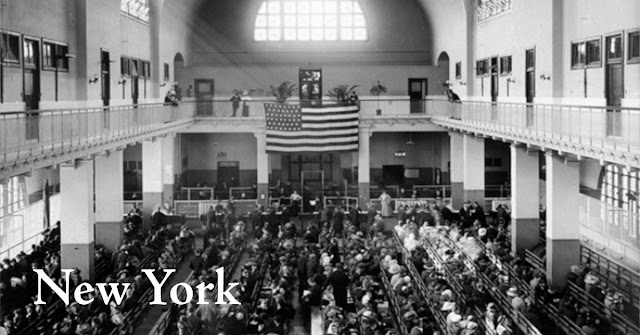
“There she lies,” says the hero, David Quixano, looking out over New York harbor, “the great Melting Pot—listen! Can’t you hear the roaring and the bubbling? There gapes her mouth—the harbour where a thousand mammoth feeders come from the ends of the world to pour in their human freight. Ah, what a stirring and a seething! Celt and Latin, Slav and Teuton, Greek and Syrian, black and yellow, Jew and Gentile, . . . the palm and the pine, the pole and the equator, the crescent and the cross—how the great Alchemist melts and fuses them with his purging flame! Here shall they all unite to build the Republic of Man and the Kingdom of God. Ah, Vera, what is the glory of Rome and Jerusalem where all nations and races come to worship and look back, compared with the glory of America, where all races and nations come to labour and look forward!” Israel Zangwill, whose parents were refugees, described the almost unbelievable optimism of the immigrant. His play The Melting Pot was a runaway...

Letters from the Fringe of Europe

Image
Touring the South Caucasus, you’re likely to see what appear to be European Union flags on official buildings, particularly in town centers. This is the flag of the Council of Europe: a less exclusive group than the EU, but one for which membership does designate “European-ness”. There is a certain pride in this: In 1999, the year Georgia joined, the prominent politician Zurab Zhvania famously declared “I am Georgian, therefore I am European.” Joining the “European family” entails mutual cooperation with regard to culture, economics, and security, but does it really settle the debate? Not really. The people of modern-day Turkey, Georgia, Armenia, and Azerbaijan feel caught between Asia and Europe, not quite at home in the cultural centers of the East or the West, and demonstrating in themselves a marvelous dialectic between the two. This is the historic role of the regions called Anatolia and the Transcaucasus. The Turkish Republic was one of the first countries to join the ...

Letters from the Baltic

Image
In the mid-nineteenth century, European peoples began a movement toward self-definition in terms of “national” or “ethnic” distinctions. It was an age of social upheaval and change. With the industrialization of the Baltic region (modern Lithuania, Latvia, and Estonia), indigenous ethnic groups began to replace Baltic Germans, Polish-speaking elites, and Jews in towns and cities. These same urbanized populations were subject to the Russification policies of the later tsars and developed a greater sense of their own identity in response. As national consciousness arose, resistance to imperialism took the form of increased interest in folk traditions—music, literature, dance, dress, and a revival of pre-Christian religious traditions in institutional form. The principle of national self-determination shattered several empires in the First World War, leading to independence for Lithuania, Latvia, Estonia, and Finland on the Baltic, Poland, Hungary, Czechoslovakia, and Yugoslavia in...

リトアニア、カウナスの杉原千畝

Image
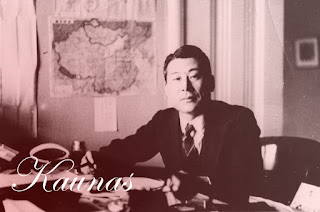
For English click here. 東ニ病氣ノコドモアレバ 行ッテ看病シテヤリ 西ニツカレタ母アレバ 行ッテソノ稻ノ朿ヲ負ヒ 南ニ死ニサウナ人アレバ 行ッテコハガラナクテモイヽトイヒ 北ニケンクヮヤソショウガアレバ ツマラナイカラヤメロトイヒ ヒドリノトキハナミダヲナガシ サムサノナツハオロオロアルキ ミンナニデクノボートヨバレ ホメラレモセズ クニモサレズ サウイフモノニ ワタシハナリタイ —宮沢賢治 (1896-1933) リトアニアで外交官をしていた菅原千畝氏は、戸口で100人以上の難民がいる騒動で目を覚ましました。ほとんどがポーランドのユダヤ人で、ドイツの占領から逃れようとしていました。唯一の方法は、ソビエト連邦を横断し、さらに海外に渡航するために日本へ入国することでした。ソビエトは、日本の通過ビザを持っている人にのみ退出許可を与えるだけでした。

Letters from Eastern Europe

Image
Nationality cannot be observed in the blood, nor in the soil, nor even on the tongue. “Nationality exists in the minds of men,” a Dutch historian explained, in the wake of the last Great War. “Outside men’s minds there can be no nationality, because nationality is a manner of looking at oneself not an entity as such. Common sense is able to detect it, and the only human discipline that can describe and analyse it is psychology. . . . This awareness, this sense of nationality, this national sentiment, is more than a characteristic of the nation. It is nationhood itself.” Nations, in other words, are not natural entities but social constructs, like race or gender, resting on sometimes insidious assumptions about the essential characteristics of their members. Today a revival of nationalism is reshaping the postwar order of Europe. These nationalist impulses emerge from a basic human desire for the perceived safety of a strong group identity, and for perceived homogen...

Letters from Southeast Asia

Image
Nationalism assumes that the world-system naturally divides into unified societies, identifiable by the essential characteristics of language, culture, religion, history, or ancestry, and that these characteristics are held in common and retained over time. Nations are seen as rooted in a specific territory, the repository of its history and memory. The interests of the nation are taken to be the supreme good, and those interests can only be promoted by self-governance, by a nation-state. In the twentieth century, ethnic nationalism entered East and Southeast Asia like a virus, which modernized Japan caught from Europe and spread to its colonial acquisitions. In the twenty-first century, this set of assumptions continues to shape the perceptions of Asian peoples and the activities of Asian governments: to turn neighboring countries into adversaries rather than partners, to reduce pluralism to tribalism and persecution, and to reject progressive change as foreign even where it ...

Travel With A Microphone

Image
It took me a few long trips to realize that audio recordings can be just as evocative as videos at a much smaller size. Here's one from my 2016 travels in Central Asia, Russia, and Iberia, when a kind Portuguese couchsurfer let me in on his weekly poetry event. The rest can be seen here.

Photographs from the Silk Road

Image
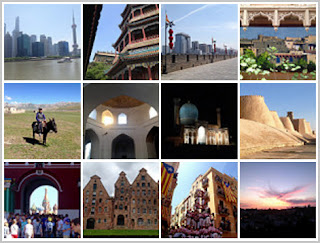
I took too many photographs of buildings and landscapes along the Silk Road. My overland journey took me through China, Central Asia, Russia, and Europe, from May to September 2016. A full set of pictures can be found on Flickr . See the Silk Road on Flickr >>

Letters from the Silk Road

Image
Central Asia has always held out to me a special enchantment. There at the Jaxartes ended the empire of Alexander; there in the trackless steppe gathered the hordes which plagued the ancient and medieval world; there on dusty plains lie Samarkand, Kashgar, and a scattered constellation of cities where the meandering trade roads between East and West converge. The term “Silk Road,” though not coined until 1877, announces an older half-imagined adventure of camel trains in haunted wastes, of turbaned merchants in covered bazaars, of danger and romance by starlight. Archaeological evidence suggests that commerce between China and Europe never matched the vision of orientalists. Nevertheless, the transcontinental route that we call the Silk Road changed history by transporting and transforming the culture, religion, art, and technology of every civilization it touched. My own journey along Silk Road—from a ferry embarked in Kobe harbor on 10 May to a final flight from Madrid on 9 ...

A Brief Guide to Osaka

Four years living in Osaka helped me to appreciate the nuances of a foreign culture, but also allowed me to build up a routine of places where I loved to walk, eat, drink, and play. Tourists often skip through Osaka on their way to Kyoto, which is forgivable, and Tokyo, which is not. Here is a city worth living in, with places that are amazing but hard to find. Now that I am leaving it, here are my recommendations for anyone wondering what to do in Japan's second megalopolis. North / Umeda Go to the roof of JR Umeda Station for a view of the city. There is a nice hike north of the city at the Minoh waterfall. Check out the bars and restaurants around Fukushima Station on the JR Loop Line. Central / Shinsaibashi Walk around Amemura ("Americatown") near Shinsaibashi Station, especially on weekends, and unforgettably on Halloween. The Semba Center is a row of shops and offices built under 10 blocks of highway. In the basement of building 9 there are a lot...

Photographs of a Year Abroad

Image
For those readers who missed it,  here are 110 favorite photos from my 2009 to 2010 trip through Western  and Eastern Europe , Greece and the Balkans , the Near East , India , Southeast and East Asia . Click here for the Flickr album.