Posts

Letters from the Baltic
Image
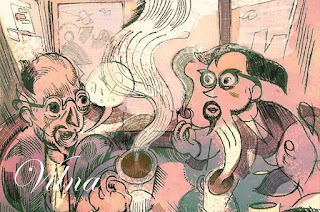
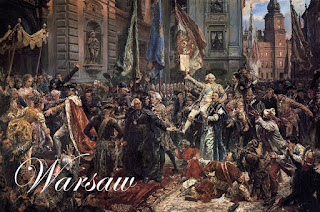
In the mid-nineteenth century, European peoples began a movement toward self-definition in terms of “national” or “ethnic” distinctions. It was an age of social upheaval and change. With the industrialization of the Baltic region (modern Lithuania, Latvia, and Estonia), indigenous ethnic groups began to replace Baltic Germans, Polish-speaking elites, and Jews in towns and cities. These same urbanized populations were subject to the Russification policies of the later tsars and developed a greater sense of their own identity in response. As national consciousness arose, resistance to imperialism took the form of increased interest in folk traditions—music, literature, dance, dress, and a revival of pre-Christian religious traditions in institutional form. The principle of national self-determination shattered several empires in the First World War, leading to independence for Lithuania, Latvia, Estonia, and Finland on the Baltic, Poland, Hungary, Czechoslovakia, and Yugoslavia in...
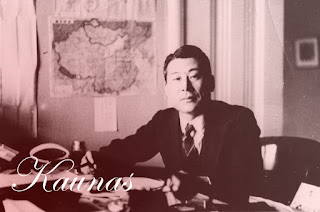
リトアニア、カウナスの杉原千畝

Image
For English click here. 東ニ病氣ノコドモアレバ 行ッテ看病シテヤリ 西ニツカレタ母アレバ 行ッテソノ稻ノ朿ヲ負ヒ 南ニ死ニサウナ人アレバ 行ッテコハガラナクテモイヽトイヒ 北ニケンクヮヤソショウガアレバ ツマラナイカラヤメロトイヒ ヒドリノトキハナミダヲナガシ サムサノナツハオロオロアルキ ミンナニデクノボートヨバレ ホメラレモセズ クニモサレズ サウイフモノニ ワタシハナリタイ —宮沢賢治 (1896-1933) リトアニアで外交官をしていた菅原千畝氏は、戸口で100人以上の難民がいる騒動で目を覚ましました。ほとんどがポーランドのユダヤ人で、ドイツの占領から逃れようとしていました。唯一の方法は、ソビエト連邦を横断し、さらに海外に渡航するために日本へ入国することでした。ソビエトは、日本の通過ビザを持っている人にのみ退出許可を与えるだけでした。

Letters from Eastern Europe

Image
Nationality cannot be observed in the blood, nor in the soil, nor even on the tongue. “Nationality exists in the minds of men,” a Dutch historian explained, in the wake of the last Great War. “Outside men’s minds there can be no nationality, because nationality is a manner of looking at oneself not an entity as such. Common sense is able to detect it, and the only human discipline that can describe and analyse it is psychology. . . . This awareness, this sense of nationality, this national sentiment, is more than a characteristic of the nation. It is nationhood itself.” Nations, in other words, are not natural entities but social constructs, like race or gender, resting on sometimes insidious assumptions about the essential characteristics of their members. Today a revival of nationalism is reshaping the postwar order of Europe. These nationalist impulses emerge from a basic human desire for the perceived safety of a strong group identity, and for perceived homogen...

Letters from Southeast Asia

Image
Nationalism assumes that the world-system naturally divides into unified societies, identifiable by the essential characteristics of language, culture, religion, history, or ancestry, and that these characteristics are held in common and retained over time. Nations are seen as rooted in a specific territory, the repository of its history and memory. The interests of the nation are taken to be the supreme good, and those interests can only be promoted by self-governance, by a nation-state. In the twentieth century, ethnic nationalism entered East and Southeast Asia like a virus, which modernized Japan caught from Europe and spread to its colonial acquisitions. In the twenty-first century, this set of assumptions continues to shape the perceptions of Asian peoples and the activities of Asian governments: to turn neighboring countries into adversaries rather than partners, to reduce pluralism to tribalism and persecution, and to reject progressive change as foreign even where it ...

Travel With A Microphone

Image
It took me a few long trips to realize that audio recordings can be just as evocative as videos at a much smaller size. Here's one from my 2016 travels in Central Asia, Russia, and Iberia, when a kind Portuguese couchsurfer let me in on his weekly poetry event. The rest can be seen here.

Photographs from the Silk Road

Image
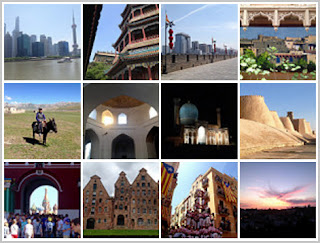
I took too many photographs of buildings and landscapes along the Silk Road. My overland journey took me through China, Central Asia, Russia, and Europe, from May to September 2016. A full set of pictures can be found on Flickr . See the Silk Road on Flickr >>

Letters from the Silk Road

Image
Central Asia has always held out to me a special enchantment. There at the Jaxartes ended the empire of Alexander; there in the trackless steppe gathered the hordes which plagued the ancient and medieval world; there on dusty plains lie Samarkand, Kashgar, and a scattered constellation of cities where the meandering trade roads between East and West converge. The term “Silk Road,” though not coined until 1877, announces an older half-imagined adventure of camel trains in haunted wastes, of turbaned merchants in covered bazaars, of danger and romance by starlight. Archaeological evidence suggests that commerce between China and Europe never matched the vision of orientalists. Nevertheless, the transcontinental route that we call the Silk Road changed history by transporting and transforming the culture, religion, art, and technology of every civilization it touched. My own journey along Silk Road—from a ferry embarked in Kobe harbor on 10 May to a final flight from Madrid on 9 ...